

Container chassis types
A container chassis is the wheeled frame that lets a truck carry an intermodal container between a port, rail ramp, container yard, warehouse, or customer facility. In drayage, the chassis is not just a trailer. It affects legal weight, axle loading, route eligibility, appointment planning, equipment availability, and final cost.
This guide explains the main chassis types used in container drayage, how standard, triaxle, and super chassis tiers differ, and why the right chassis can matter as much as the container type itself.
Quick answer
The most common drayage chassis categories are:
- Standard chassis: The normal two-axle chassis used for ordinary-weight containers.
- Triaxle chassis: A three-axle chassis used when cargo is heavier and weight needs to be spread across more axles.
- Super or 4-axle chassis: A specialized heavy chassis used for higher supported cargo tiers, subject to equipment availability and route approval.
- Combo or extendable chassis: Adjustable chassis that can support different container lengths, such as 20-foot, 40-foot, or 45-foot containers.
- Reefer-compatible setup: Not always a separate chassis type, but reefer and non-operating reefer containers have higher tare weight and may require power or genset planning.
Portmate uses chassis tiers when checking overweight cargo, estimating supported lane weight, and deciding whether a move can be quoted instantly or needs manual review.
Why chassis type matters
A container chassis carries the loaded container and transfers that weight through the truck and chassis axles. That is why chassis selection is closely tied to overweight rules and bridge-law logic.
In the United States, truck weight is not controlled only by total gross weight. The Federal Highway Administration bridge formula also considers axle count and axle spacing because concentrated weight can damage roads and bridges. State rules, permits, bridge restrictions, local road limits, and terminal requirements can add more constraints.
That means the same container can be acceptable on one setup and not acceptable on another:
- A standard chassis may work for normal-weight cargo.
- A triaxle chassis may be needed when the cargo is heavy but still within supported limits.
- A super chassis may be needed for a higher cargo tier, if the lane and equipment supply support it.
- Manual review may still be required when route, permit, bridge, or equipment details are uncertain.
Chassis type vs. container type
The container type is the box, such as 20GP, 40GP, 40HC, 20RF, or 40RF. You can review the supported codes in the standard container types guide.
The chassis type is the wheeled equipment under the box. A container chassis is built to secure an intermodal container with locking points, then move it over the road between intermodal facilities and customer locations.
These two choices work together. A 40HC dry container on a standard chassis is a different operating setup from a 40RF reefer on a triaxle chassis. The container tare, chassis tare, axle count, axle spacing, and route all affect the final supported weight.
Main chassis types
The names used in daily operations can vary by region, chassis pool, carrier, and equipment provider, but the practical categories below cover the most common drayage cases.
Standard chassis
A standard chassis usually means a two-axle chassis used for ordinary dry container moves. With a typical three-axle tractor, this is commonly treated as a five-total-axle setup.
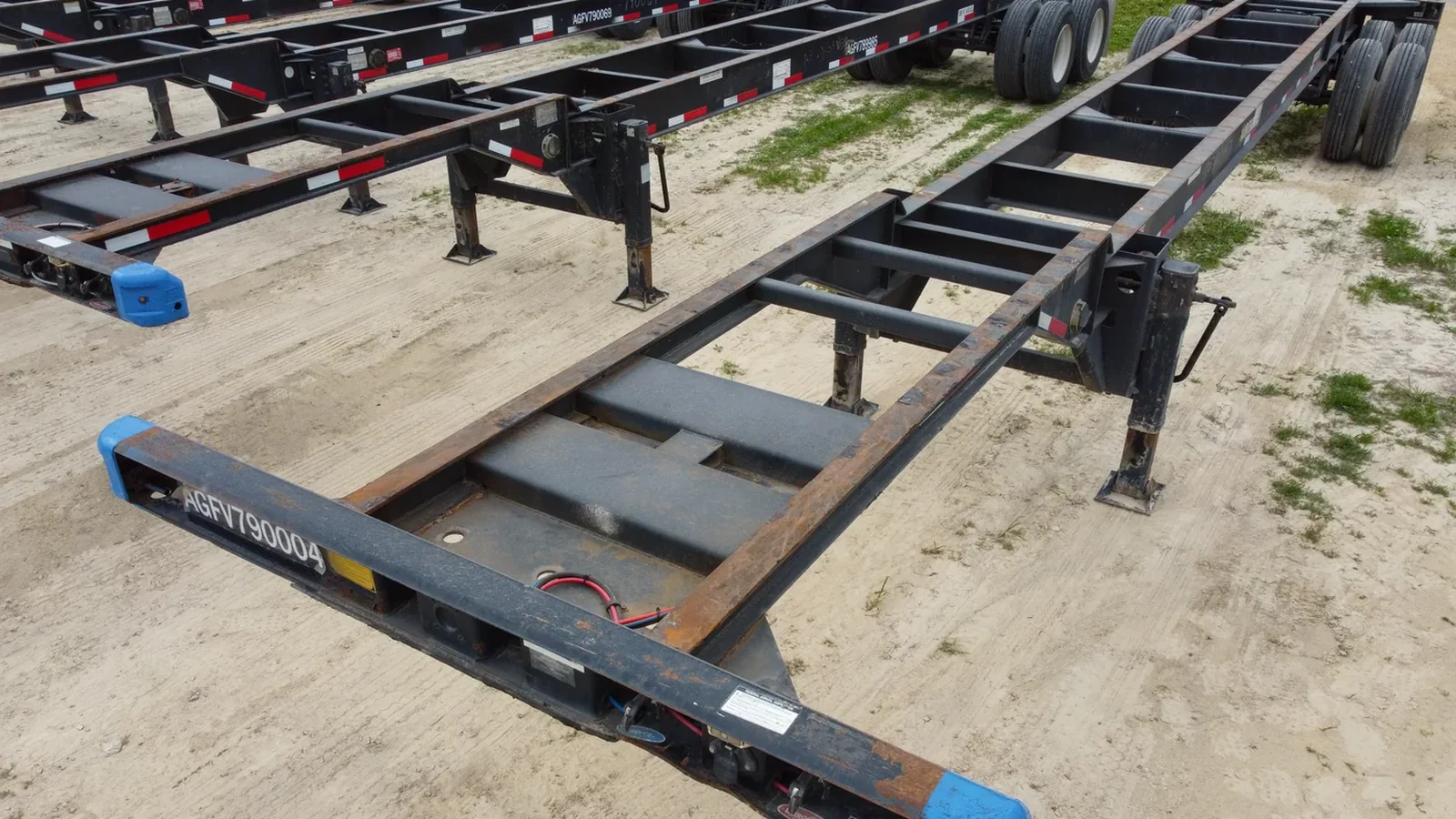
Use a standard chassis when:
- The cargo is within normal supported weight for the container and lane.
- No special overweight tier is needed.
- The terminal, carrier, or chassis pool has standard equipment available.
- The route does not require additional axle distribution.
In Portmate planning assumptions, a standard chassis uses an estimated chassis tare of about 8,000 lb. Actual equipment may differ, so final confirmation still depends on the real chassis used.
Triaxle chassis
A triaxle chassis adds a third chassis axle. With a typical three-axle tractor, this is commonly treated as a six-total-axle setup.
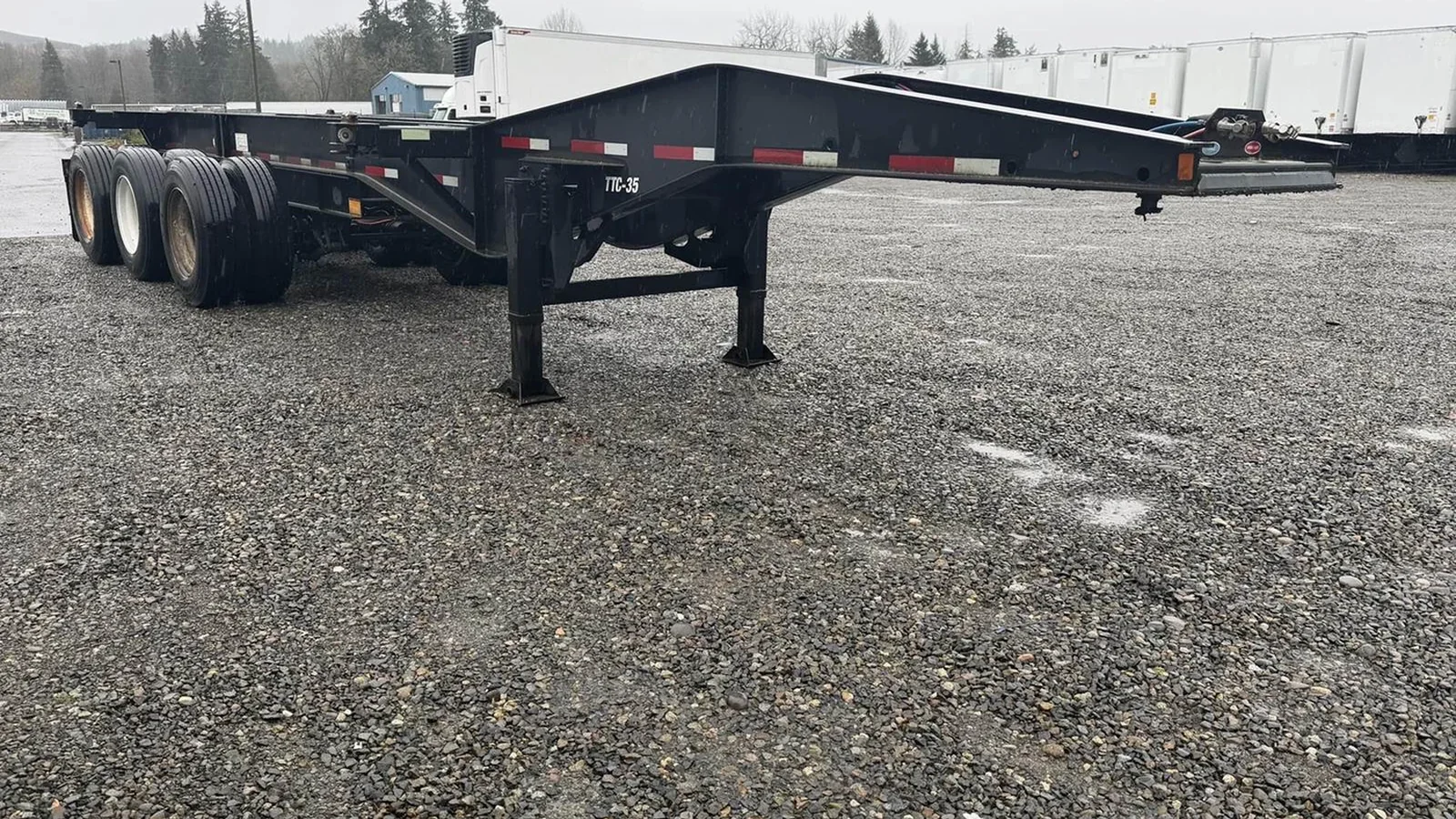
Use a triaxle chassis when:
- Net cargo weight is too heavy for a standard chassis tier.
- The load needs better axle distribution.
- The lane supports triaxle movement under applicable route and permit rules.
- The terminal and carrier can provide triaxle equipment.
Manufacturer examples show how three-axle chassis can be built for different applications. Cheetah lists three-axle chassis models for ISO containers, and CIE describes tandem and tridem configurations on its container chassis page.
In Portmate planning assumptions, a triaxle chassis uses an estimated chassis tare of about 12,900 lb.
Super or 4-axle chassis
A super chassis, sometimes described operationally as a four-axle chassis, is used for heavier supported cargo tiers. With a typical three-axle tractor, this is commonly treated as a seven-total-axle setup.
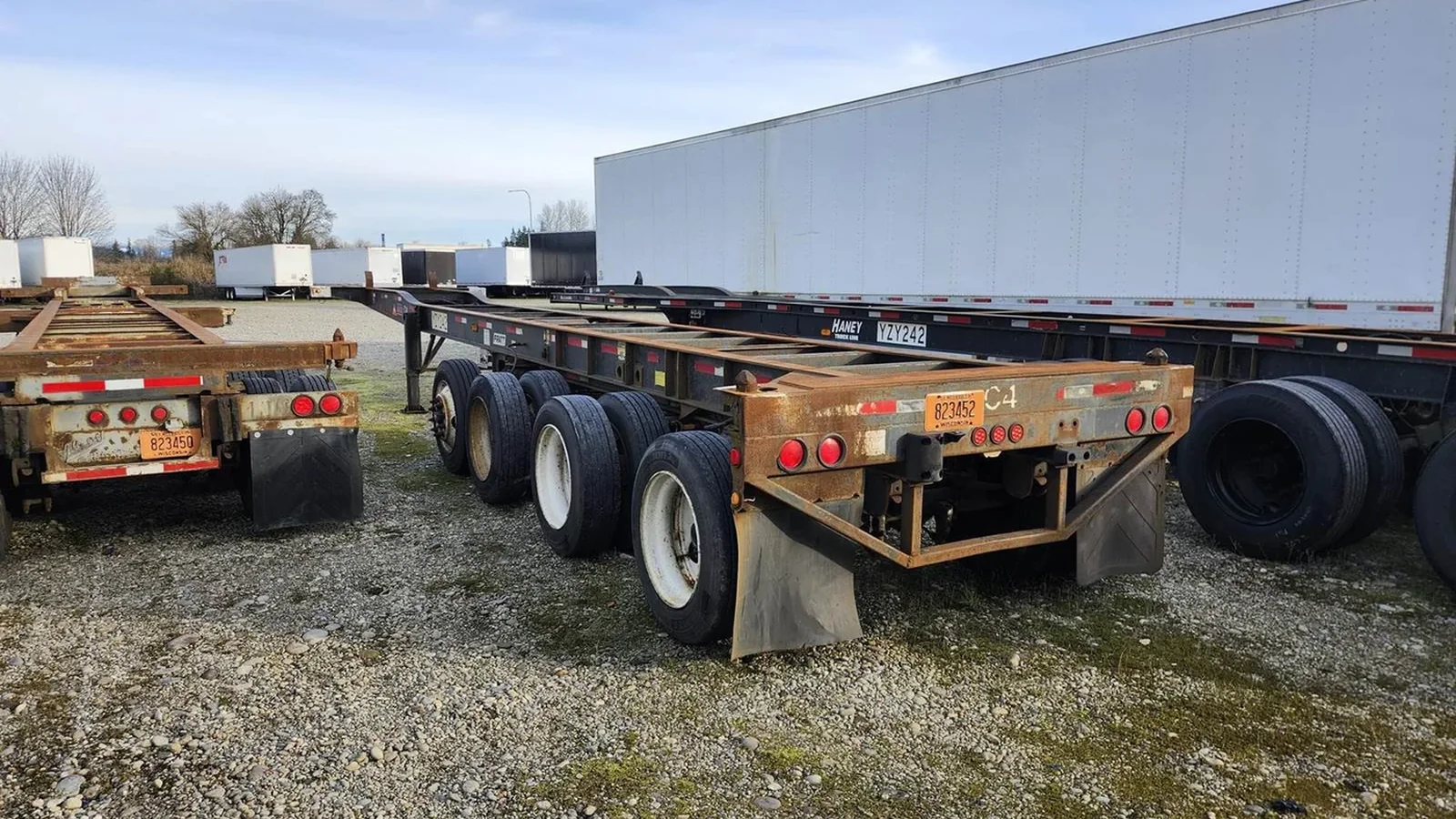
Use a super chassis when:
- The cargo is above the triaxle-supported tier.
- The lane can support the movement with the extra axle group.
- Permit, route, bridge, and equipment checks support the move.
- The equipment is actually available for the terminal and date.
Cheetah lists four-axle chassis models, including extendable heavy configurations. This kind of equipment is more specialized, so availability can be tighter than standard chassis availability.
In Portmate planning assumptions, a super chassis uses an estimated chassis tare of about 13,800 lb. Super chassis supply can be tight and must be confirmed before booking.
Combo and extendable chassis
Combo and extendable chassis are built to handle more than one container length or operating setup. Depending on the model, they may support 20-foot, 40-foot, 45-foot, or domestic 53-foot container positions.
Use combo or extendable chassis when:
- The operation needs flexibility across container lengths.
- A carrier or chassis pool uses one adjustable frame for multiple ISO container sizes.
- The move requires a specific bolster, pin, or extension configuration.
- The route and equipment setup remain legal for the load.
Dorsey Intermodal describes a 20-40 tridem combo chassis that can handle a 40-foot container or two empty 20-foot containers. Cheetah also lists extendable chassis that can carry different ISO container sizes, including 20-40-45 three-axle configurations.
The important detail is that flexibility does not automatically mean higher legal payload. Axle count, axle spacing, container position, route rules, and the actual equipment rating still control the final supported weight.
Reefer chassis considerations
A reefer container has a refrigeration unit, which increases container tare weight compared with a dry container. A non-operating reefer, or NOR, still has that reefer unit even when it is being used like a dry box. The standard container sizes and payloads guide explains the planning tare and payload differences.
For reefer moves, chassis planning may need to consider:
- Higher container tare weight
- Power or genset requirements when cargo must stay refrigerated
- Terminal, ramp, or yard procedures for refrigerated equipment
- Different supported cargo thresholds compared with dry containers
- Whether the move is operating reefer, non-operating reefer, or dry cargo in reefer equipment
Portmate adjusts reefer and NOR assumptions because the refrigeration unit adds weight. That can slightly reduce the net cargo that fits within a standard or triaxle tier compared with dry equipment.
How Portmate uses chassis tiers
Portmate does not ask users to manually choose every equipment detail before getting a quote. Instead, the system uses the container type, net cargo weight, terminal or metro, facility location, and route states to evaluate the move.
For overweight support, Portmate commonly reasons through these chassis tiers:
- Standard: two chassis axles, five total axles with a typical three-axle tractor
- Triaxle: three chassis axles, six total axles with a typical three-axle tractor
- Super: four chassis axles, seven total axles with a typical three-axle tractor
The lane check also considers typical tractor tare, chassis tare, container tare, container payload limits, route states, permit-supported gross weight logic, and public overweight rules available for the route. You can review the lane workflow in the overweight limits guide.
If the cargo is clearly within a supported tier, Portmate can show the supported chassis option. If the cargo is near a limit or exceeds supported assumptions, the move may need manual review.
How to ask for the right chassis support
You do not need to know the chassis type in advance. If you know the cargo details, Portmate can evaluate the lane and advise the equipment tier.
Good prompts include:
- “Can Portmate support 24,000 kg from Savannah to facility ZIP 30304 in a 40HC?”
- “What chassis do I need for 48,000 lb from Houston to Pasadena, TX in a 40GP?”
- “Show supported chassis options from Chicago to ZIP 60174 for a 40HC.”
- “Can a 40RF with 21,000 kg net cargo move from Norfolk to ZIP 23234?”
For the most accurate result, include:
- Terminal, ramp, port, or metro
- Full facility address when available
- Container type
- Net cargo weight
- Commodity
- Refrigerated, non-operating reefer, hazmat, or overweight details
- Any known appointment, permit, or accessorial needs
Common questions
Is triaxle the same as overweight?
No. Triaxle is an equipment setup. Overweight is the operating condition that may require special equipment, permits, route checks, or extra charges.
A triaxle chassis is often used for overweight cargo, but not every triaxle move is automatically overweight in every context. The route, cargo weight, container type, and applicable rules decide the final status.
Does a heavier chassis reduce cargo capacity?
Yes, in many calculations it can. A heavier chassis may improve axle distribution, but it also adds tare weight to the total vehicle combination.
That is why the best chassis is not simply the heaviest chassis available. The right setup is the one that supports the cargo legally and practically on the lane.
Does a reefer always need a special chassis?
Not always. A reefer container may move on a standard, triaxle, or specialized setup depending on the cargo weight, route, power requirement, and equipment availability.
The key difference is that reefer and NOR containers have more tare weight than dry containers. Portmate accounts for that when estimating supported cargo weight.
Why can chassis availability affect booking?
Chassis are physical assets. Standard chassis are usually more available than specialized triaxle or super chassis. A lane can be technically supportable but still require confirmation if the needed chassis is scarce at that terminal, ramp, or date.
Can I request a specific chassis type?
Yes. You can mention the chassis type in chat, especially if your shipper, carrier, or previous move required it. Portmate can use that context while checking the lane and quote.
What you can do next
If you are planning a shipment, start with the cargo details rather than trying to choose equipment manually.
- Ask Portmate for an instant drayage quote
- Ask whether your cargo needs standard, triaxle, or super chassis support
- Check whether a specific cargo weight is supported on the lane
- Request manual review when the cargo is near a route, permit, or equipment limit
The goal is simple: match the container, cargo weight, lane, and chassis tier before the move is booked, so the shipment is priced correctly and operationally realistic.