
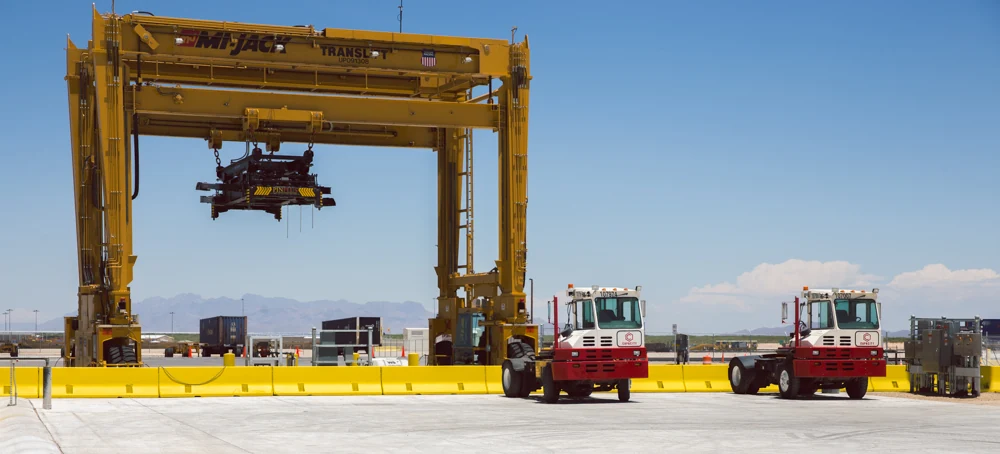
Rail ramps and equipment depots in Santa Teresa
Three places in Santa Teresa, New Mexico, can appear on the same dispatch order. Union Pacific’s intermodal ramp at 9050 Strauss Rd is where a driver collects or delivers a booked rail container. Twin Cities Services at 2500 Twin Cities Ave handles depot work arranged with the operator or equipment provider. The Santa Teresa–San Jerónimo Port of Entry is the highway crossing into Chihuahua. Each stop has its own release, operating window and receiving instructions. Start with the UP terminal page, Twin Cities depot information and New Mexico Border Authority’s crossing guide.
The ramp serves the El Paso market from the New Mexico side. Union Pacific opened it on its Sunset Route in 2014 and transferred its El Paso intermodal operations there. If the rail release names BNSF El Paso, use BNSF’s South Santa Fe Street facility listing.
Santa Teresa rail ramp and equipment depot
| Facility | Address |
|---|---|
| Union Pacific Santa Teresa Intermodal Terminal | 9050 Strauss Rd, Santa Teresa, NM 88008 |
| Twin Cities Services | 2500 Twin Cities Ave, Santa Teresa, NM 88008 |
Union Pacific Santa Teresa Intermodal Terminal. The railroad lists container-on-flatcar capability and intermodal support at 800-877-5123. Use UP’s terminal page and driver map for the layout and directions inside the ramp. UP’s FIRMS directory lists T571 for 9050 Strauss Road. Confirm the required facility identifier with the broker or releasing party before filing. A FIRMS code identifies a cargo facility in customs systems. It serves a different purpose from the port of entry code.
Twin Cities Services. The operator’s depot page describes equipment inspections at the gate, storage and account inventory reporting, and gives the local contact number 575-589-6081. The operator also offers transloading from railcars, trailers and ocean containers. Confirm the work before booking a truck. A container return, a chassis drop, a flip and a warehouse transfer may require different authorization and service windows.
Work the Union Pacific ramp
Union Pacific publishes these hours in local Mountain Time on its Santa Teresa terminal page. Check the live page and your shipment instructions when dispatching.
| Service | Published hours |
|---|---|
| Terminal gate | 24 hours daily |
| Flips | 24 hours daily |
| Roadability | 6 a.m. to 10 p.m. weekdays and 10 a.m. to 6 p.m. weekends |
Roadability is the service to consult when terminal equipment needs attention before it can go on the road. If a driver discovers a tire, light or brake problem on the assigned chassis outside that window, ask UP what equipment or assistance it can provide before tying a receiver or border appointment to the pickup. For an extra lift, identify the party authorizing it and check UP’s flip policy for the payment or guarantee required before outgate.
Collecting a load. Confirm the container number, availability, pickup reference, release status and last free day. Ask whether the box is grounded, what chassis can be used and whether any lift or storage charge needs approval. Provide the driver with the current pickup details and the carrier’s dispatch instructions. Santa Teresa supports UPGo and uses Precision Gating Technology. Use the applicable lane and kiosk instructions for the transaction.
Tendering a load. Confirm the rail booking, equipment assignment, waybill and intended train cutoff through the schedule and support links on the terminal page. Check any cargo, weight or equipment conditions tied to that service. A loaded container can reach a 24-hour gate after the cutoff for its booked departure. For a temperature-controlled shipment, confirm who supplies and monitors power during every handoff, including a wait on either side of the border.
Managing rail storage. Use the unit’s last free day and applicable contract or tariff. UP’s intermodal storage policy publishes different general free-time rules for domestic and international service categories. The rail billing category and the ultimate destination can describe different parts of the trip. Ask the party controlling the rail billing which rule applies, and price any pre-pull or off-terminal hold separately if a border or warehouse appointment runs later than the rail deadline.
For a delivery that stays in the United States, use the receiver’s address in Santa Teresa, Sunland Park, El Paso or wherever the load is going. A New Mexico rail pickup and Texas delivery can be one U.S. truck move. The empty and chassis instructions may still require a separate trip back into New Mexico, so get those destinations before agreeing to a one-way rate.
Plan equipment work around Twin Cities and the chassis provider
Twin Cities’ published depot schedule gives the yard a weekday window of 8 a.m. to 6 p.m., the office 8 a.m. to 5 p.m., and flips 8 a.m. to 4:30 p.m. It lists weekend closures. A gate open for yard activity can be past the cutoff for a lift or a specific provider’s chassis transaction.
Use the equipment owner’s instructions to separate the two returns.
- Empty container. Get the current return location from the container owner, ocean line or controlling party. Ask whether it accepts the size, type and condition of the box, and whether an appointment or return reference is needed. For ONE dry equipment, use its El Paso and Santa Teresa return page for the applicable instructions. Confirm reefer, damaged or other special equipment separately.
- Chassis. Confirm the provider, authorized start and stop locations, and whether the unit must be returned bare. DCLI’s Gulf directory lists both UP Santa Teresa and Twin Cities under El Paso, with transaction-specific instructions. Recheck the permitted sizes, release process and receiving window for the intended day. A provider’s posted window can be narrower than the host ramp’s or yard’s operating hours.
- Lift, repair or storage. Arrange the work with the responsible operator, including authorization, fees, time limits and when the equipment can be collected. Ask what changes if a unit is rejected at inspection. Send the driver the revised instructions before moving it to another address and retain the interchange receipts showing where the box and chassis actually terminated.
If the receiver has a drop arrangement, give the carrier a way to confirm the empty is ready. When the equipment return depends on a lift or a narrow provider window, a late empty notice can require a second trip. Include that possibility when agreeing on chassis use, yard storage and the plan for any overnight hold.
Choose the right way to serve Juárez or the Borderplex
Settle which part of the trip moves by rail, which carrier takes the cargo by road, and whether the cargo will stay inside the original container. Those choices determine which appointments and releases the dispatcher needs.
Truck through Santa Teresa–San Jerónimo
The New Mexico Border Authority’s port guide describes access between I-10 and the port of entry via Artcraft Road and Pete Domenici Highway. Use the railroad’s directions for the separate Strauss Road approach and NMDOT travel information for current New Mexico road conditions. New Mexico’s border trucking guidance also identifies a separate state inspection facility north of the crossing. Leave time for an inspection in the receiving plan.
The New Mexico Border Authority’s operating notice lists weekday commercial vehicle hours of 6 a.m. to 10 p.m., while its binational trade page gives a shorter weekday window for Santa Teresa–San Jerónimo. Confirm the cargo processing hours for the date, direction and commodity with the border carrier and broker, especially for an evening, weekend or holiday move. Use the commercial lane view in CBP Border Wait Times for U.S.-bound conditions. For a Mexico-bound load, ask the carrier and Mexican broker for the southbound window and expected queue.
Put these handoffs in the dispatch order.
- Customs and documents. Name the broker or filing party on each side and agree who confirms the cargo can proceed. Provide the shipment, container and seal references and any commodity-specific paperwork the broker requests. For a U.S.-bound move, agree who files the truck manifest and who confirms cargo release. CBP’s ACE truck manifest notice identifies the filing tool. Rail availability, customs release and the carrier’s gate authority are separate checks.
- Carrier and interchange. Identify who takes the container at the ramp, who crosses, and where any transfer takes place. If using a Mexico-domiciled carrier for a U.S. leg, confirm that its authority covers the actual route using FMCSA’s guidance on commercial-zone and long-haul authority.
- Equipment on both sides. Obtain permission for the actual box and chassis to cross, agree who takes custody and when, and document where each unit comes back. If the chassis cannot cross, arrange an authorized swap or transfer. If the shipment needs to change containers or trailers, book a transload and agree who controls the seal and records cargo condition at that handoff.
For a heavy or oversize load, give the carrier the commodity, gross and axle weights, dimensions, and intended route from the crossing to the actual receiving address. Check the NMDOT border permit resources for the Santa Teresa program. New Mexico’s special-permit rule points to a defined area for eligible Santa Teresa movements. Have the carrier verify that the permit covers the whole local leg, including any ramp or yard stop. Check the permit and route separately for any Texas leg.
Rail service, industrial delivery and transloading
Union Pacific’s Mexico intermodal page describes its direct and border service options. Ask UP which routing, gateway and handoff apply to the specific booking. A train movement to the Santa Teresa ramp followed by a road move through the land port is a different itinerary from through-rail service into Mexico.
For a rail-served receiver, UP’s Gateway Rail Park profile describes the industrial site and its short-line connection. The Santa Teresa Southern Railroad is part of that rail-served network. Ask the receiver whether the order calls for a railcar placement, a truck delivery to a warehouse door, or a transfer between modes. Each calls for a different pickup or delivery instruction, even when the addresses are in the same district.
If the original rail container is unsuitable for the onward trip, get a transload quote using the commodity, total weight, piece or pallet count, dimensions, handling requirements, outbound trailer type and cargo availability. Include time and labor to unload and reload, and give the inbound driver a confirmed empty return. The Portmate transloading guide explains how to scope that transfer.
Worked example for a UP pickup headed to Juárez
Suppose a 40-foot ocean container arrives at UP and the Juárez receiver has a Friday afternoon slot. Dispatch has a released container and a truck, but the truck is only confirmed for the U.S. leg. Start by reserving the border carrier or transfer yard and confirming that both the container and the assigned chassis are authorized for the proposed move. If the chassis must stay in the U.S., secure a lift and a substitute chassis before setting the border time. If the cargo will change equipment, get a warehouse slot and confirm the onward trailer and paperwork instead.
Work backward from the Juárez receiving appointment through the commercial crossing, transfer and UP outgate. Check the rail last free day, the time available for any roadability issue, and the broker’s go-ahead. If a hold pushes the load past commercial processing hours, ask where the released equipment may wait and how storage and chassis time will be billed. UP’s gate hours may allow a Friday pickup even when the border leg has to move later.
After delivery, confirm when the receiver can release the empty. Check whether the owner accepts the box at Twin Cities and whether the chassis provider takes the bare chassis at the same site, UP, or another assigned location. If the empty comes back on a weekend and the approved depot is closed, arrange where the driver will stage it and when the equipment clocks can stop. Keep the delivery receipt, border handoff record and both equipment return receipts together.
For the U.S. road leg, the Portmate map above helps distinguish the Strauss Road ramp from the Twin Cities yard and inspect the approach to each. The guide to exploring rail ramps in 3D shows how to orient yourself around a ramp before dispatch. Confirm gate and crossing instructions with the operators handling the move.