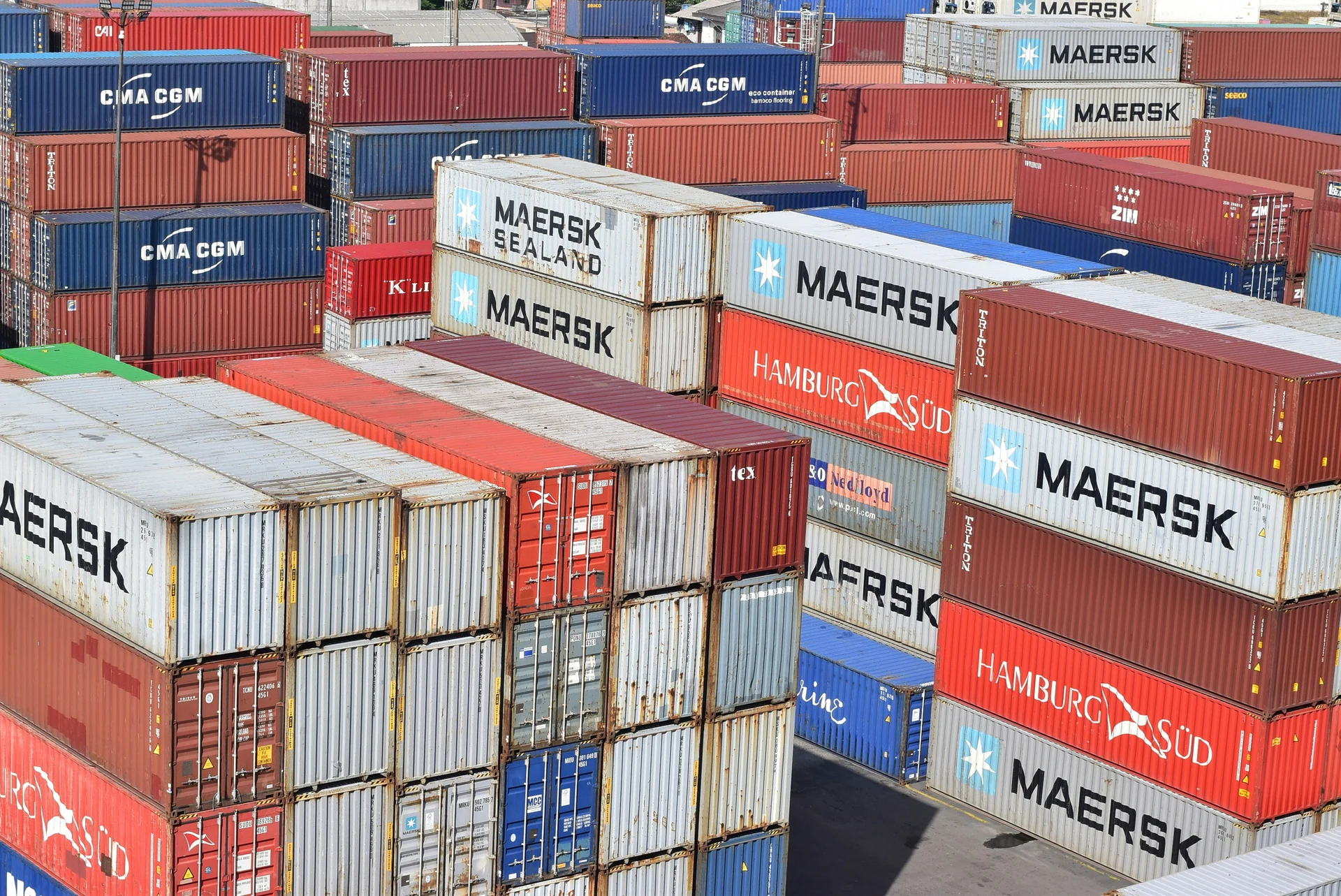

What is an overweight shipment
An overweight shipment exceeds a weight limit that applies to the proposed move. In container drayage, that can mean cargo above a carrier's standard handling threshold, a truck combination above an ordinary road limit, or too much weight on an axle group. The useful follow-up is: overweight against which limit?
Legal weight usually describes a shipment expected to move within ordinary weight limits on the agreed equipment and route. It is common industry shorthand, but it does not identify one universal cargo allowance. A quote, packing list, container door marking, and truck scale ticket can each refer to a different weight.
An overweight shipment may still be moved legally when the equipment, load distribution, route, and any required permits support it. This guide focuses on U.S. ocean-container trucking and , where those distinctions affect planning, pricing, and whether the truck can complete the delivery.
What overweight and legal weight mean in practice
When a dispatcher asks whether a container is legal weight, the practical question is often whether it can move as a standard-weight load on the equipment normally used for that lane. When a quote includes an overweight charge, the carrier may be identifying additional equipment or handling rather than declaring that the shipment cannot legally move.
For example, separates standard cargo weights on regular chassis from overweight weights requiring special chassis. Its acceptance also depends on location, equipment availability, and applicable state rules. That is a carrier planning framework, not a nationwide road-weight table.
The terms become clearer when the reference point is stated:
| Description | What it tells you |
|---|---|
| Legal weight for the quoted service | The load falls within the provider's stated ordinary operating assumptions. |
| Overweight for standard equipment | The carrier needs to evaluate a different setup or additional handling. |
| Above an ordinary road-weight limit | The move needs a valid exception or applicable permit, or the load must change. |
| Above the container's own rating | The box is overloaded; road permitting does not increase its capacity. |
The , chapter 2, distinguishes an overloaded cargo transport unit from an overweight one. A container can remain within its permitted gross mass while exceeding a road or rail allowance when the carrying vehicle is included. This is why a container that the ocean carrier can carry may still present a trucking problem.
Also distinguish overweight from oversize. Weight concerns mass; size concerns dimensions such as height, width, and length. A standard closed container can be heavy without being unusually wide or long. A movement can also exceed both kinds of limits. Permit agencies evaluate the applicable dimensions and weights separately; starts with the exact vehicle-and-load measurements.
Understand the weight numbers before comparing limits
Before anyone decides whether a shipment is overweight, confirm what the stated number includes. The word gross is particularly easy to misread because it can describe the cargo, the packed container, or the entire road combination.
Cargo weight, container tare, and loaded-container weight
Product net weight can mean the goods alone. Depending on the document, it may exclude cartons, crates, pallets, and other packing materials.
Packed cargo weight includes the goods and the packaging, pallets, blocking, bracing, and dunnage loaded with them. Those materials consume weight allowance too. Maersk's published explicitly include them.
Container tare is the weight of the empty container. Use the actual unit's markings or equipment record when a load is close to a limit. Different container designs and refrigeration equipment can change tare. The explains the main equipment differences.
Loaded-container gross weight combines the container and everything packed inside it. It does not include the tractor or chassis.
For a straightforward example, assuming no additional attached equipment:
- Packed cargo: 42,000 lb
- Empty container: 8,500 lb
- Loaded-container gross weight: 50,500 lb
The shipment has not suddenly gained cargo. These are different descriptions of the same loaded box.
VGM and road combination gross weight
Verified Gross Mass, or VGM, is the verified mass of the packed container used in the applicable ocean-shipping process. IMO provides two methods: weighing the packed container, or using an approved certified method to add the cargo, packages, pallets, securing materials, and container tare. also sets out the shipper's responsibility to provide it.
Road combination gross weight is the total loaded tractor, chassis, container, cargo, and other carried weight. Using hypothetical operating weights:
| Component | Weight |
|---|---|
| Tractor in operating condition | 20,000 lb |
| Chassis | 8,000 lb |
| Empty container | 8,500 lb |
| Packed cargo | 42,000 lb |
| Total road combination | 78,500 lb |
These values illustrate the calculation; they are not standard tare specifications. The tractor figure must account for its operating condition, including fuel, driver, and carried equipment. Count any separate genset or other attached equipment once as well.
That distinction matters when reading paperwork: 42,000 lb of cargo, 50,500 lb of packed container, and 78,500 lb on a truck scale answer different questions.
Maximum gross weight and payload ratings
The maximum gross mass on the container's CSC safety approval plate is a rating, not the measured weight of the current shipment. Door markings may also show tare and maximum payload. Those values describe the unit's capacity; they do not authorize a particular truck route. The , annex 4, explains how to interpret these markings.
Similarly, a chassis manufacturer's weight rating is an equipment specification. Cheetah, for example, publishes tare and GVWR separately for its . Neither number replaces road, axle, or route checks.
How U.S. road-weight limits work
The familiar 80,000-lb figure is only one part of the assessment. A truck must also satisfy applicable axle-group and bridge requirements, along with restrictions on the actual route.
The ordinary federal Interstate baseline
establishes the ordinary federal framework for the Interstate System and reasonable access:
| Measure | Ordinary baseline |
|---|---|
| Gross vehicle weight | 80,000 lb |
| Single axle | 20,000 lb |
| Tandem axle group | 34,000 lb |
These are vehicle and axle limits, not cargo-only limits. The regulation also addresses Bridge Formula restrictions, special permits, and grandfathered allowances. State and local requirements and posted restrictions still need to be checked for the proposed movement.
A tandem is an axle group defined by axle spacing under the applicable rules. Do not automatically apply a tandem allowance to every pair of axles, or assume that a third axle creates one fixed nationwide allowance.
You may see a common loading example of 12,000 lb on the steering axle plus 34,000 lb on each of two tandems. The 12,000-lb figure is not a universal federal steering-axle ceiling. The federal framework also addresses the manufacturer's steering-axle rating. The relevant equipment and legal requirements must control the actual check.
A load can be overweight below 80,000 lb
Suppose the hypothetical 78,500-lb combination above produces this scale ticket:
| Axle group | Measured weight |
|---|---|
| Steering axle | 12,000 lb |
| Drive tandem | 35,000 lb |
| Chassis tandem | 31,500 lb |
| Total | 78,500 lb |
The drive tandem exceeds the ordinary 34,000-lb limit even though total gross weight is below 80,000 lb. The move requires correction or applicable authorization before proceeding under those conditions.
Gross weight alone therefore cannot prove compliance. show how standard combinations are positioned to weigh steering, drive, and trailer axle groups. Specialized arrangements may need a different weighing procedure; confirm it with the scale operator.
Axle spacing and the Bridge Formula matter too
The considers how much weight is carried by groups of consecutive axles and the distance between their outer axles. Concentrating the same weight over a shorter distance can create a problem that total gross weight does not reveal.
FHWA illustrates a five-axle combination at 80,000 lb whose individual axle and tandem checks pass, but whose interior four-axle group exceeds its Bridge Formula allowance. A shipper does not need to calculate every axle group personally, but the carrier needs the real configuration to assess the move.
Cargo position matters for the same reason. Two containers with identical packed weights can produce different axle loads if dense freight is concentrated toward different ends. A successful move last month does not establish that another truck or loading pattern will pass today.
Why container size and chassis change the answer
Container size helps estimate equipment needs, but a size code does not establish a legal cargo weight. Actual tare, axle layout, load position, and carrier acceptance all affect the result.
Common cargo thresholds are planning references
Published carrier guidance demonstrates why familiar figures should be labeled carefully:
| Published setup | Cargo (lb) |
|---|---|
| HMM: 20-foot dry, regular chassis | 38,000 |
| Maersk: 20-foot dry, slider chassis | 39,200 |
| Both: 40-foot standard dry | 44,000 |
| Both: 40-foot high-cube dry | 43,700 |
| Both: 40-foot high-cube reefer | 39,300 |
These examples come from and . They illustrate planning assumptions, not a guarantee for every shipment or equipment combination. Confirm the provider's current acceptance for the actual lane.
The variation explains why one team may flag a container as overweight earlier than another. Their equipment and service assumptions may differ. Ask what the threshold measures before comparing numbers.
A container's payload capacity can exceed its road allowance
Maersk's lists container cargo capacities substantially above its ordinary U.S. inland planning references, with variations by equipment type and country. The box's capacity and the road move's allowance answer different questions.
For example, if a particular unit is rated to carry a proposed load, the truck still needs enough gross and axle allowance for that load plus the equipment. Conversely, staying within a road allowance does not excuse exceeding the box's own rating or loading it improperly.
High-cube equipment adds height and volume; it does not automatically add usable road payload. Reefer machinery and additional power equipment also consume weight allowance. Check the actual unit when the margin is small.
More axles help only as part of a complete setup
A standard two-axle chassis commonly runs behind a three-axle tractor, making five total axles. A triaxle chassis changes that configuration, but its usefulness depends on spacing, load distribution, equipment ratings, and the rules governing the route. The explains the main types.
Specialized equipment can also add tare. Under an unchanged gross ceiling, extra empty weight leaves less allowance for cargo, even when the equipment improves axle distribution.
Other solutions use lighter equipment. that allow heavier cargo before an overweight permit becomes necessary in its operations. The relevant question is which complete setup supports the shipment, not simply which chassis has the most axles.
When an overweight shipment can move with a permit
A permit can authorize movement above ordinary limits under specified conditions. Its coverage depends on the issuing authority, eligible cargo, equipment, roads, and other terms. Treat permit review as part of route planning.
Cargo eligibility and jurisdiction
Whether cargo is divisible or nondivisible can affect eligibility. FHWA explains that a nondivisible load is one whose separation would compromise its intended use, destroy its value, or require more than eight workhours to dismantle with appropriate equipment. States may consider containers moving in international commerce nondivisible, but are not required to do so. A seal alone does not establish a nationwide right to a permit. See .
For a route crossing jurisdictions, identify the authority needed for each affected segment. Review the actual permit conditions, including vehicle configuration, axle limits, approved roads, validity, travel conditions, and any commodity restrictions. An allowance for one part of the trip does not establish eligibility for the next part.
Two examples of limited port-area permissions
Los Angeles and Long Beach area: Caltrans' provides for up to 95,000 lb gross with a specified four-axle tractor and three-axle trailer configuration on identified nearby state-road segments. This is a defined permission with equipment and road boundaries.
The separately addresses approved city routes, axle and equipment requirements, inspections, and other conditions. It requires Caltrans permission for use of state routes. The distinction matters when a route passes between road authorities.
Texas port areas: TxDMV's covers eligible movements within 30 miles of select ports, with specified six- or seven-axle arrangements. Its gross ceilings are 93,000 and 100,000 lb, respectively, subject to the full conditions. This permit excludes Interstate operation and does not override posted road or bridge limits.
These examples explain why a short permitted port move and a longer inland delivery may require different plans. Confirm the whole trip before assuming that a heavy container can continue to its final destination intact.
Ocean and rail acceptance do not establish road eligibility
VGM supports the ocean-loading process; it does not certify a road combination's axle loads. Railroads also apply their own equipment, loading, and commercial requirements. Union Pacific, for example, publishes separate provisions for heavyweight surcharges, incorrect declared weights, and exceeding maximum weight thresholds in its .
For a multimodal shipment, evaluate each leg. A rail movement can deliver a box to an inland ramp that still needs a carefully planned road delivery. An ocean or rail heavyweight charge is also not proof that road permits have been obtained.
How to plan or resolve an overweight move
The best time to identify a weight constraint is before origin loading. If the container is already packed or available at a terminal, organize the facts before dispatching equipment or agreeing to corrective work.
Gather the information the carrier needs
Provide a clear shipment description containing:
- Pickup terminal or rail ramp and full delivery location.
- Container size, type, number, and any refrigeration or genset requirement.
- Commodity, packed cargo weight, and explicit units.
- Available container tare, loaded-container weight, or VGM, each labeled separately.
- Packaging, heavy individual pieces, and the loading pattern when known.
- Pickup timing, delivery appointment, and relevant receiver access restrictions.
- Any existing scale ticket, proposed equipment, or known route restriction.
Use pounds or kilograms explicitly. If someone provides a figure in tons, confirm whether they mean U.S. short tons or metric tonnes. Also establish whether the figure is per container or the total across several containers.
Documents may supply different pieces of the answer. Reconcile discrepancies instead of substituting the container's maximum rating for its actual loaded weight. For product-specific screening, see .
Match the remedy to the problem
If an axle group is too heavy: The carrier should assess whether an approved equipment adjustment or a revised loading arrangement can correct distribution. Reweigh after a relevant change. Moving weight between axles does not reduce total gross weight.
If total gross weight is too high: Evaluate suitable equipment and applicable permit options. If those cannot support the complete route, reducing or dividing the load may be necessary. Adding a chassis axle does not automatically raise the ordinary gross limit.
If the container itself is overloaded: Reduce the load or use appropriately approved equipment and a revised transport plan. The container's own capacity remains a separate constraint.
If the intact container cannot complete the route: Consider a lawful move to a suitable transload facility, followed by redistribution into compliant outbound loads. illustrates this approach with separate outbound weights and shipping documents. The move to the warehouse must itself be supportable.
Transloading adds handling and coordination, so compare the full operation. The explains the tradeoffs; covers the execution and cargo handoffs.
If the stated weight is near a limit or the lane crosses several states, request a early. A planning answer is most useful when the input identifies the correct cargo weight and equipment type.
Understand what the additional charges cover
An overweight surcharge is a commercial charge. A permit fee pays for a particular authorization. A specialized chassis charge concerns equipment. They can appear separately or be included in an agreed service price; ask what the quote covers.
Additional costs can also arise from weighing, load correction, transloading, extra truck movements, or delays. Maersk's identify several of these possible consequences when weight requirements are not met.
For a useful comparison, ask whether the price includes required equipment, permit arrangements, weighing, and the complete intended route. Clarify what happens if the actual weight differs from the declared weight. Use the to distinguish other charge names.
Common questions about overweight shipments
These questions help interpret the short descriptions that appear in bookings, rate requests, and dispatch conversations.
Does overweight mean the shipment is illegal?
The term identifies a weight issue or service category. Whether the movement is lawful depends on the applicable limits, equipment, actual loading, and any valid authorization. A permitted overweight move can be legal when all its conditions are met.
Is 44,000 lb always legal in a 40-foot container?
It is a common planning reference for packed cargo in a standard dry container. Actual equipment, container type, axle distribution, and route restrictions can change the answer. Confirm acceptance for the particular move.
Can a partly empty container be overweight?
Yes. Unused space does not establish remaining weight allowance. Dense cargo can reach a weight constraint while leaving substantial volume unused, and a concentrated load can create an axle or equipment-loading problem.
Does paying an overweight surcharge cover every permit?
Check the quote's scope. The surcharge, equipment provision, and permit arrangements are separate questions even when they are packaged into one price. Obtain confirmation that the proposed service covers the intended movement.
Can the same cargo move on one setup but not another?
Yes. Changing the tractor, chassis, container tare, axle spacing, loading arrangement, or route can change the assessment. Use actual shipment details rather than relying only on a previous move's weight.
Getting a quote from Portmate is simpler
You do not need to work out the overweight surcharge yourself. When you , provide the lane, container type, commodity, and accurate net cargo weight with its units. Portmate automatically calculates the applicable overweight surcharge from the cargo weight you provide and includes it in the quote.
Keep container tare, chassis weight, truck weight, and VGM separate from the cargo input, and clarify any packaging excluded from your cargo figure. For a heavy load, Portmate can also help check lane support before booking, so the pricing and transport plan can be reviewed together.