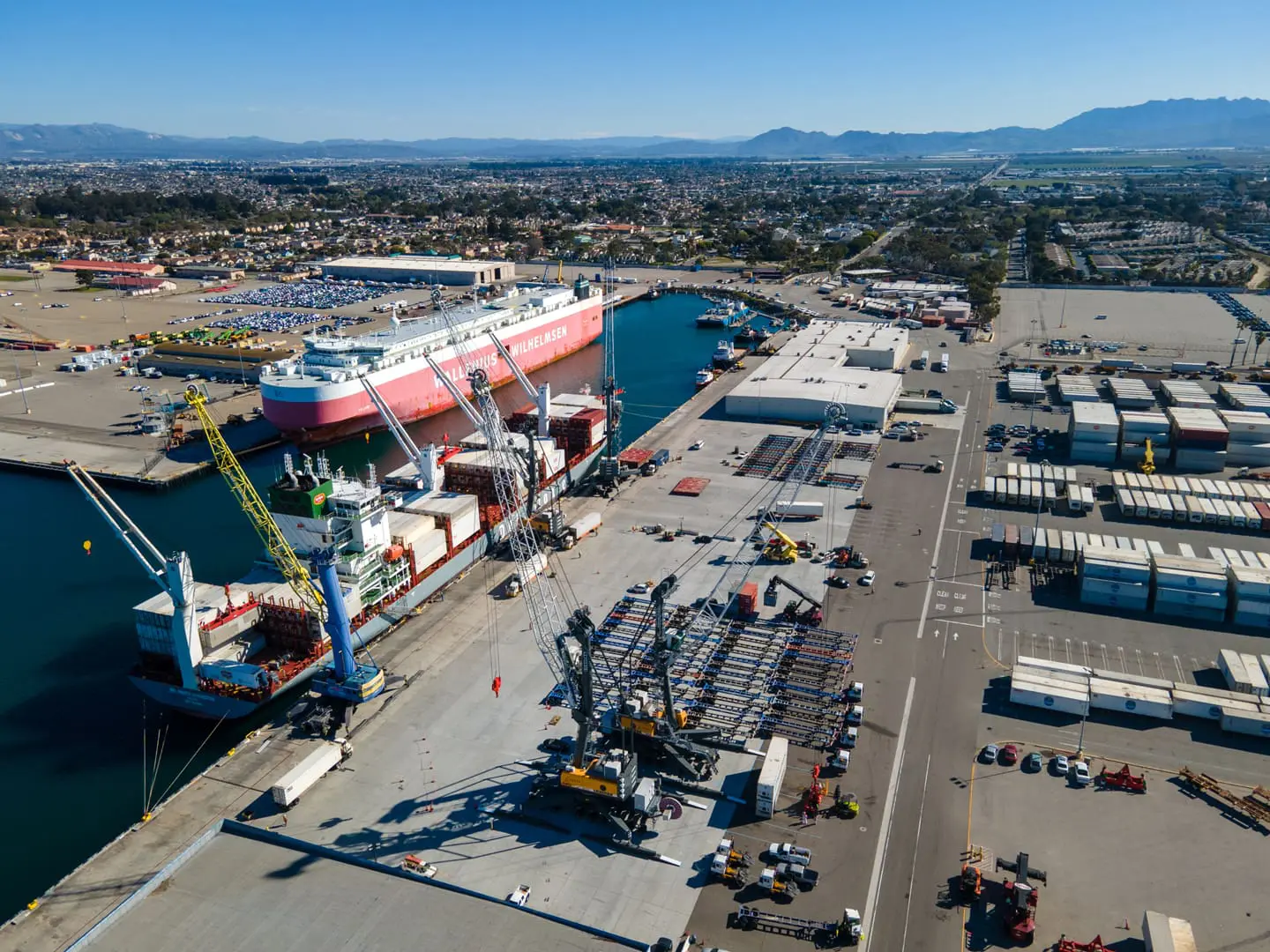

Terminals in Port Hueneme
Port Hueneme is a Ventura County cargo gateway with operator-specific handling arrangements. For a truck visit, the cargo handler and release matter more than the general port address. The address at 333 Ponoma Street is the port’s administrative office; it should not be used as a universal cargo collection gate.
A vehicle, a piece of machinery, and an ocean container can all move through a port while requiring very different trucks and loading plans. This guide explains how to identify the Hueneme operation and turn the cargo release into a workable collection.
Start with the cargo operator
Port and marine locations
| Facility | Address |
|---|---|
| Port of Hueneme | 333 Ponoma St, Port Hueneme, CA 93041 |
The identifies 333 Ponoma Street as its office and gives separate cargo-entrance directions via Hueneme Road. The address in the directory is therefore a valid port reference. The truck still needs the entrance specified by the operator handling the shipment.
For example, publishes 105 East Port Hueneme Road, Berth 5. That address identifies the PacRo operation, which describes handling automobiles, heavy equipment, and breakbulk, with storage and cargo-handling services. It serves a different purpose from the Ponoma Street office.
For cargo handled by Ports America, its provides cargo-availability and local contact resources. Match the vessel and bill of lading to the responsible handler before selecting the truck’s destination. An ocean shipment record and a port name alone leave the collection point unresolved.
Describe a vehicle or machinery pickup properly
For rolling cargo, provide the unit identification, dimensions, weight, and operating condition. Explain whether the vehicle or machine can be driven, steered, and braked as required for the proposed loading method. The carrier and terminal need to agree how it will be transferred onto the inland transport equipment.
Include attachments and loose pieces in the cargo description. A machine’s main dimensions may not describe a separate bucket, blade, crate, or accessory moving under the same release. Identify the total piece count and which pieces need separate handling so the truck arrives with the right deck space and securing arrangement.
At the receiving end, confirm unloading capability before collection. The destination may need an appropriate dock, ramp, lifting equipment, or an arranged specialist service. A truck that can accept the cargo at the port does not by itself solve unloading at the customer’s premises.
If the condition or dimensions differ from the original order, pass the change to the carrier before loading. A precise description is especially valuable when selecting transport for equipment that does not fit a conventional enclosed trailer.
Scope breakbulk and container work separately
For breakbulk, give the handler and carrier the piece-level information: count, packaging, dimensions, weight, lifting arrangement, and any handling restrictions supplied by the cargo owner. Ask who provides loading and whether a coordinated appointment is required for that work.
For an intact container, identify its number, size and type, cargo weight, release status, and chassis arrangement. The equipment will also need an authorized return after delivery. A standard container chassis is a solution for carrying the specified container; it should not be assumed to suit loose machinery or another breakbulk piece.
If the cargo needs to transfer between a container and another vehicle, arrange the handling location and labor as a separate service. The explains the additional cargo handoffs involved. Establish where that work occurs and what equipment leaves the facility afterward.
Coordinate release, access, and the truck route
Check cargo availability with the named operator, then confirm the collection reference and any remaining release requirements. Give the driver the operator’s current gate instructions and the applicable receiving window. Office hours, vessel operations, and truck loading availability can describe different activities, so use the window for the actual pickup.
The port’s describes its connection to Highway 101 through the port corridor. Use that as orientation, then have the carrier confirm the suitable truck approach for the equipment and load. A route to the administrative office should not replace the cargo-gate instructions.
Where a collection involves a separate government or naval receiving organization, obtain that organization’s access instructions. The commercial port reference does not establish entry authorization for another installation. State the responsible recipient and physical handoff in the order.
For an export delivery, perform the same coordination in reverse. Match the booking to the cargo handler, confirm receiving dates and the loading or unloading arrangement, and make sure the driver has the correct reference before departure.
Keep Hueneme distinct from the San Pedro Bay ports
Port Hueneme is a separate destination from Los Angeles and Long Beach. If a shipment description or freight proposal switches between those names, reconcile the actual port and handler before comparing the inland transport. A carrier’s ability to serve one harbor market does not settle the route or loading requirement at another.
The and cover those separate container facilities.