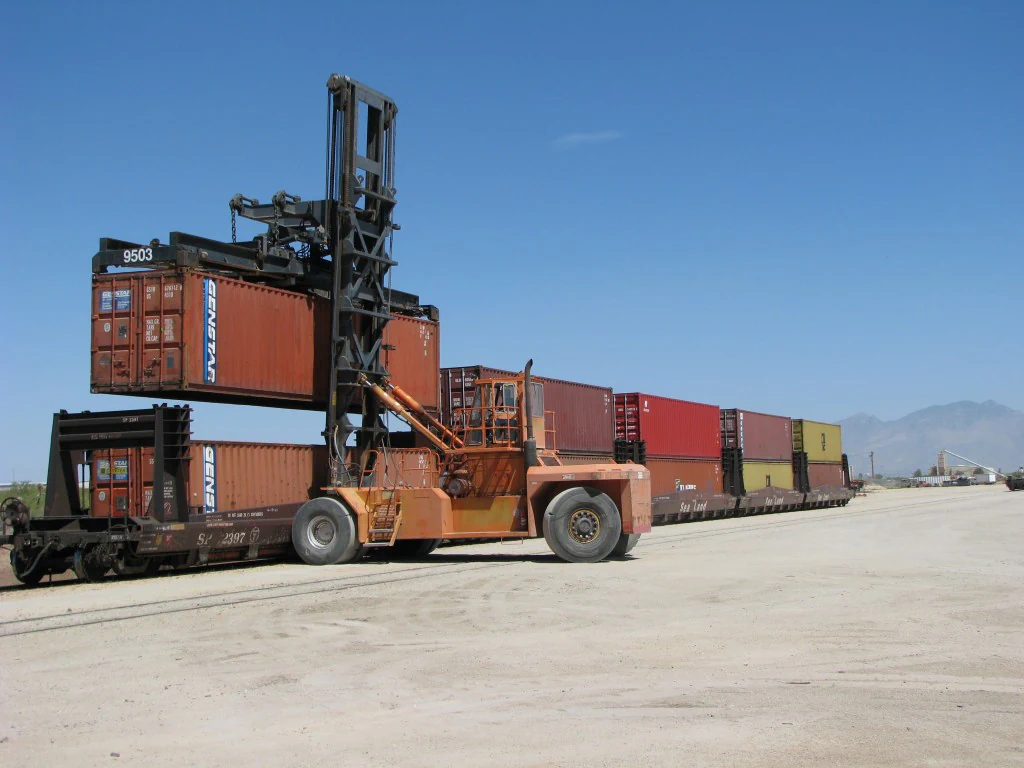

Rail ramps in Tucson
Tucson’s intermodal facilities are on East Century Park Drive: the Union Pacific ramp at 6800 and the Port of Tucson at 6964. They serve the same freight district, but the names and street numbers identify different instructions. Use the facility named on the release when assigning the truck.
The Port of Tucson is an inland logistics operation. Alongside container intermodal, it offers rail-related cargo handling and warehousing. That range is useful to Southern Arizona shippers, provided the order states whether the job moves a sealed container, transfers cargo, or places goods into storage.
Two addresses on Century Park Drive
Rail ramps
| Facility | Address |
|---|---|
| Port of Tucson, LLC | 6964 E Century Park Dr, Tucson, AZ 85756 |
| UP Tucson | 6800 E Century Park Dr, Tucson, AZ 85706 |
identifies the intermodal facility at 6800 East Century Park Drive, Tucson, AZ 85706 and lists container-on-flatcar capability. Use the railroad’s published address and current truck-access instructions. The separately listed Port of Tucson is at 6964 East Century Park Drive, with ZIP 85756; keep the street number and receiving facility on the dispatch order.
gives 6964 East Century Park Drive. Its broader campus services should be arranged with the responsible operating team. A warehouse appointment at the inland port and a released container pickup from UP require different references even when their addresses are close together.
Phoenix, Glendale, and Laveen are different operating locations; an Arizona destination on its own is insufficient for identifying the ramp.
Read the service windows, not just the gate hours
UP publishes separate terminal, flip, and roadability schedules for Tucson. The distinction has a practical effect: a driver can be within the general terminal window yet too late for a service needed to complete the visit. A grounded container collection depends on lift availability, while an equipment problem may require roadability support.
Check the live terminal page when scheduling, then ask the carrier to allow time for the intended transaction. Do not build the appointment solely around the last possible gate entry. If the customer’s receiving slot is later in the day, discuss whether pickup should occur earlier and whether an agreed intermediate hold is necessary.
Availability also needs to be checked at unit level. Train arrival is not a complete truck instruction. Give the carrier the container number and pickup reference, and confirm that the shipment has been released for the planned visit. If a hold or release issue remains, resolve it before tying the receiver appointment to a pickup that cannot yet proceed.
Select the right rail or cargo service
For an intact-container delivery, the truck collects the released unit and takes it to the receiver. The key operating details are the exact ramp, suitable chassis, cargo weight, unloading arrangement, and subsequent equipment return. Cargo stays in the box during the truck leg.
For a transload, the provider needs a description of the goods and the work. The Port of Tucson’s describes dock- and grade-level access, railcar handling, and commodities including lumber, steel, sheetrock, and grain. A shipment enquiry should specify the railcar or container type, commodity, quantity, piece dimensions where applicable, and intended outbound vehicle.
Those facts help establish whether the proposed job can be handled and where it should be scheduled. A bulk transfer, bundled-material unload, and machinery move should not be scoped as the same generic “rail pickup.” Discuss the loading method and receiving equipment with the operator before the inbound shipment is committed.
The explains the handoffs involved when cargo changes vehicles rather than remaining inside its original container.
Arrange storage and onward delivery
The inland port’s describes short- and long-term storage and identifies refrigerated and frozen options through Tucson Frozen Storage. Confirm the actual receiving facility and storage conditions for the commodity. Do not infer that every building or container position offers temperature control.
When cargo arrives before the final receiver is ready, decide whether it should stay in equipment or be unloaded into a warehouse. The first arrangement ties up a container and possibly a chassis; the second introduces cargo handling and an outbound loading task. Ask the provider to scope the whole sequence, including the empty-container disposition after stripping.
For a cross-border supply chain, name the actual onward destination and responsible transport parties. Tucson’s inland-port role does not itself establish that the rail release covers the next movement into Mexico. Keep the border leg and its provider’s instructions visible in the order so the local collection is planned for the correct handoff.
Finish with the equipment destination
After a Southern Arizona delivery, the empty container and chassis may need separate returns. Obtain the owner’s current designation and pass the references to dispatch. A collection from UP Tucson does not automatically authorize return to the same ramp, and a warehouse appointment at the Port of Tucson does not establish depot acceptance.
For a receiver drop, agree on the ready notification and collection timing. For a live unload, confirm that the remaining return can be completed within its receiving window. Keep the interchange receipts with the delivery record so the shipment file shows both cargo delivery and equipment handoff.