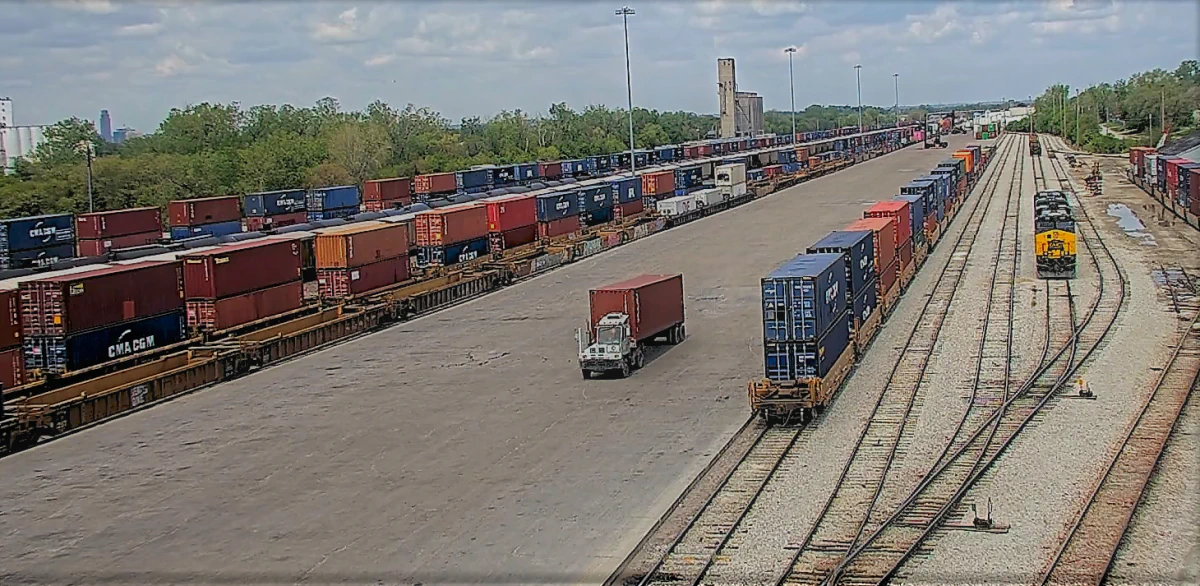

Equipment depots in Grand Rapids
Grand Rapids can appear as the customer's destination, the inland commercial destination on a bill of lading, or the place where equipment is collected or returned. Those roles do not always share one physical handoff. Masselink's Freeman Avenue yard provides a local equipment handoff; a rail-origin load can still begin at a terminal in another city.
The yard serves the broader West Michigan market. and have equipment yards of their own, at different addresses from the Grand Rapids operation. A regional service area should not obscure which operator and street the equipment instruction actually names.
Masselink's Freeman Avenue location
| Facility | Address |
|---|---|
| Masselink | 901 Freeman Ave SW, Grand Rapids, MI 49503 |
identifies the Grand Rapids address and its intermodal trucking and depot business. Its explains a particularly important operating distinction: the container yard is a shipping-line-controlled neutral pool, and equipment availability and termination authorization are handled with the shipping lines.
That makes the owner-directed instruction central to a visit. A container in the yard is not necessarily available to any exporter who needs that size, and the existence of a local pool does not establish acceptance for every import empty.
A Grand Rapids destination can use a distant rail origin
Masselink's service explanation distinguishes door, ramp, and port moves and discusses rail connections through Chicago and Detroit. Use the actual booking to determine who arranges the local dray and where it begins. A bill of lading naming Grand Rapids does not, by itself, identify the released railroad terminal.
For a door arrangement, ask the shipment provider which party controls delivery and the applicable receiving appointment. For a ramp arrangement, identify the released rail facility, pickup reference, and carrier responsible for the road leg. For a port-origin arrangement, establish whether the proposed truck service is a direct marine-terminal move or includes another handling stage.
The and help reconcile those separate origins. Neither market should be selected solely because it is closer to the receiver; the transport service and unit release determine the starting point.
When comparing proposals, use the same origin, Grand Rapids receiving premises, unloading arrangement, and equipment termination. A rail-to-door proposal and a port-to-door proposal may include different work even when both use the customer's city as their headline destination.
Line-controlled equipment needs a complete instruction
For an empty pickup, obtain the release from the responsible line or provider and specify the required size, type, condition, and booking. Ask how the driver should handle a rejected or unsuitable unit. If cargo needs a particular interior standard, address it before loading rather than after the empty reaches the shipper.
For a return, obtain the line's current termination instruction and confirm the yard's receiving procedure. Keep the unit number and destination with the truck assignment. A local return can shorten an equipment cycle, but it is useful only when the responsible parties authorize it.
Masselink also discusses import-to-export street turns in its services. Treat a proposed reuse as an approved transfer between uses, not simply as keeping a convenient empty. The owner, new booking, container condition, and next loaded receiving point all need to agree. Record who closes the import use and how the export release is documented.
For a repair or condition issue, identify the party authorized to approve work. Do not fold a damage enquiry into an ordinary return without telling the receiving operator what must be assessed. Equipment condition and interchange records should follow the unit through the handoff.
Plan the receiver and the later collection together
Ask the Grand Rapids consignee whether it will unload while the truck remains or needs a dropped container. A drop requires usable space, a chassis arrangement, a reliable empty-ready contact, and later collection. Its convenience to the receiver does not remove the equipment obligations during the hold.
If the unloading schedule changes, tell the carrier and the party controlling the return while there is still time to revise the plan. The locally available yard and receiving window should be confirmed for the new date. A forecast that the box will be empty tomorrow is different from a firm collection-ready notice.
Where a shipper wants a container positioned ahead of export loading, work backward from the next terminal's receiving deadline. Include inspection, loading, and the actual rail or marine receiving trip. A convenient Grand Rapids pickup does not make every onward service or cutoff interchangeable.
Keep warehousing separate from the depot visit
Masselink's service information also describes related warehouse and distribution arrangements. Obtain the actual receiving building and handling order when goods need to leave the container. The Freeman Avenue depot reference does not automatically identify the warehouse assigned to unload the freight.
Provide packaging, piece count, dimensions, weight, storage requirements, and the intended outbound vehicle. Ask who performs stripping, sorting, reloading, and the empty return. Our explains those separate cargo and equipment decisions.
A West Michigan shipment may combine a distant rail origin, a Grand Rapids customer, and a local equipment handoff. Naming those places and responsibilities individually produces a workable order while preserving the wider regional role that makes the local depot useful.